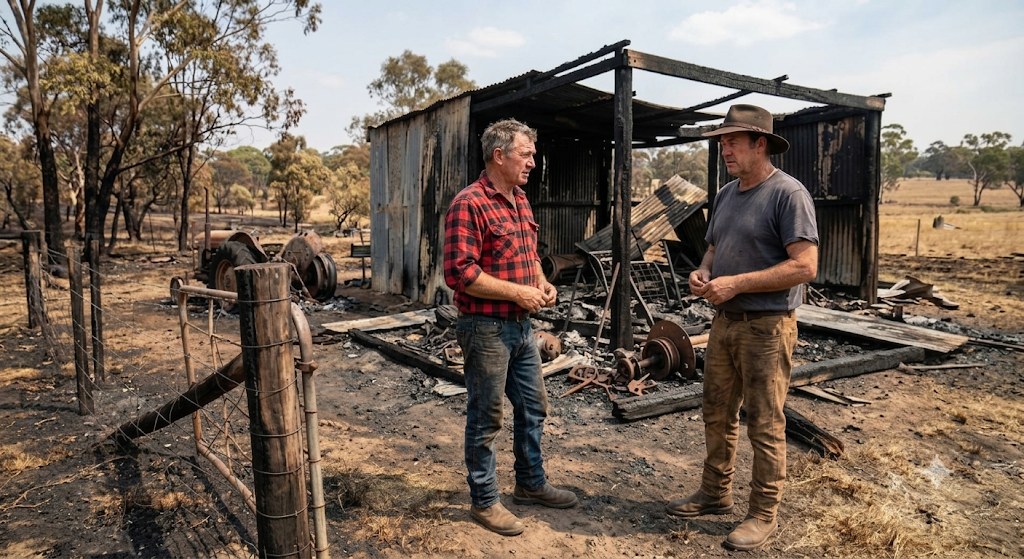
A rural property is more than the house — sheds, fencing, water tanks, pumps, machinery, sometimes an old dairy or shearing shed that's been standing longer than you've owned the place. After a bushfire or flood, the loss isn't one thing, it's dozens of things, and insurers process claims item by item, not as one big "the property."
Why rural claims take longer than they should
Most rural property owners know their place intimately — what's in which shed, what that pump cost, how old the fencing really is. What insurers need is that knowledge written down and dated, not recalled from memory in the middle of dealing with a disaster. Without it, claims stall while assessors try to verify what was actually there.
It's also easy for the total value of sheds, infrastructure and equipment to creep well past what a standard policy assumes, especially on a property that's been added to over years or decades.
What's worth having on record
- Photos of each shed, structure and major piece of fixed equipment
- Purchase or build dates and rough costs, where you have them
- Serial numbers for pumps, generators and other equipment
- A record kept somewhere that won't be lost in the same event that damages the property
Where My Asset Mate comes in
My Asset Mate's Property & Buildings category lets you log sheds, structures and infrastructure with photos and details; Tools & Equipment, for machinery and gear, is free to use with no trial needed. Everything's kept safely on your phone, and in the cloud too if you choose — so a fire or flood on the property doesn't take your records with it.
If disaster does hit, you're working from a proper list, not trying to remember every shed and its contents while you're dealing with everything else.
Worth doing well before fire season, not during it.