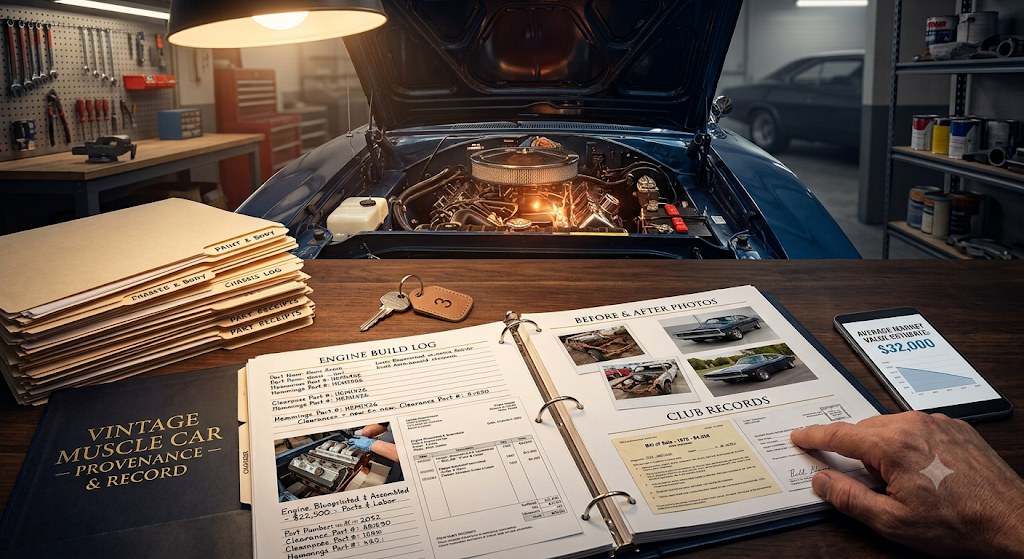
Ask any classic owner what the car's worth and you'll get a considered answer — parts, hours, history, what a similar one sold for last year. Ask an insurer the same question after an accident or theft, and "about that much" doesn't get you very far.
Why standard valuations fall short
A classic or modified vehicle rarely fits neatly into an insurer's standard pricing — it's worth what it's worth because of condition, originality, rarity and the work that's gone into it, not just its age and model. Without documentation, insurers default to conservative market averages, which can be well under what the car is actually worth to you.
Restoration work makes this worse if it's not recorded — parts, labour and provenance all add real value that's invisible unless you've kept receipts and photos along the way.
What builds a proper record
- Photos of the vehicle, inside and out, updated as work is done
- Receipts for parts, restoration work and any upgrades
- Registration, chassis and engine numbers
- Any provenance documents — ownership history, original sale paperwork, club records
Where My Asset Mate comes in
My Asset Mate's Vehicles & Machinery category is free to use — no trial needed. Log photos, receipts and documents as work is done, kept safely on your phone, and in the cloud too if you choose, so the full story of the vehicle is in one place, not scattered across old invoices.
If it's ever stolen, written off, or you just want an agreed value for insurance, you've got the evidence to back a proper number, not a guess.
A classic isn't worth "about that much." Build the record that shows what it's actually worth.